


Hey there! I'm a supplier of PPR plumbing pipes, and today I wanna chat about whether PPR plumbing pipes can be used in a desalination plant plumbing system. It's a question that comes up quite often, and there are a bunch of factors we need to consider.
First off, let's talk a bit about what PPR pipes are. PPR, or Polypropylene Random Copolymer, is a type of plastic pipe that's been around for a while. It's known for being lightweight, easy to install, and resistant to corrosion. These pipes are commonly used in residential and commercial plumbing systems for things like water supply and drainage. You can check out some of our great PPR pipe options like the Plumbing PPR Composite Pipe, PPR Pipe for Hot Water Supply, and PPR Aluminum Composite Pipe.
Now, desalination plants are a whole different ballgame. They're designed to remove salt and other impurities from seawater or brackish water to make it suitable for drinking, irrigation, or industrial use. The plumbing systems in these plants have to deal with some pretty harsh conditions.
One of the main challenges in a desalination plant is the high salinity of the water. Seawater has a salt content of around 3.5%, which is a lot compared to regular freshwater. This high salt concentration can be tough on pipes. Some materials might corrode or degrade over time when exposed to such salty water. But here's the good news: PPR pipes are generally resistant to corrosion. They don't react with the salts in the water, so they can hold up well in this aspect.
Another important factor is the temperature. Desalination processes often involve heating or cooling the water. PPR pipes have a decent temperature resistance. They can handle hot water up to a certain point. Our PPR Pipe for Hot Water Supply is specifically designed to withstand higher temperatures, which could be useful in parts of the desalination plant where hot water is involved.
Pressure is also a big deal in desalination plants. The pipes need to be able to handle the high pressures that are created during the desalination process. PPR pipes are known for their good pressure resistance. They can maintain their integrity under pressure, which is crucial for a reliable plumbing system in a desalination plant.
However, there are also some potential drawbacks to using PPR pipes in a desalination plant. One issue is the long - term exposure to chemicals. Desalination plants use various chemicals to treat the water, such as anti - scaling agents and disinfectants. While PPR is generally resistant to many chemicals, some of the more aggressive chemicals used in these plants might have an impact on the pipes over time. It's important to do some testing to make sure the PPR pipes can withstand the specific chemicals used in a particular desalination plant.
Another thing to consider is the mechanical strength. In a large - scale desalination plant, there might be a lot of movement and vibration. PPR pipes are relatively lightweight, which can be an advantage in terms of installation, but they might not be as mechanically strong as some other materials in high - stress situations. For example, if there are strong vibrations near the pumps or other equipment, the pipes need to be able to handle it without cracking or breaking.
When it comes to installation, PPR pipes are a breeze. They're easy to cut, join, and install compared to some other types of pipes. This can save a lot of time and money during the construction of a desalination plant. The joints in PPR pipes are usually made by heat fusion, which creates a strong and leak - proof connection.
In terms of cost, PPR pipes are generally more affordable than some of the metal pipes that are commonly used in industrial applications. This can be a significant advantage for desalination plant operators who are looking to keep their costs down.

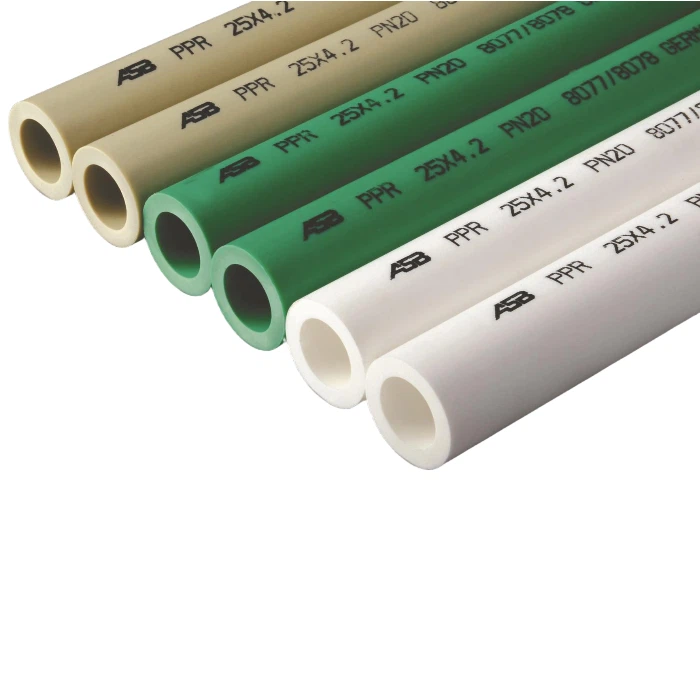
So, can PPR plumbing pipes be used in a desalination plant plumbing system? The answer is, it depends. In some parts of the desalination plant, especially where the conditions are not too extreme, PPR pipes can be a great option. For example, in the low - pressure, non - chemically aggressive areas of the plant, they can work just fine. But in areas where there are high temperatures, high pressures, or exposure to aggressive chemicals, more testing and evaluation are needed.
If you're involved in the construction or operation of a desalination plant and you're considering using PPR pipes, I'd be more than happy to have a chat with you. We can discuss your specific needs, the conditions in your plant, and see if our PPR pipes are the right fit for you. Just reach out, and we can start a conversation about how we can work together to make your desalination plant's plumbing system more efficient and cost - effective.
References
- "Plastic Pipes in Water Supply Systems" - A technical report on the performance of different plastic pipes in water - related applications.
- "Desalination Plant Design and Operation" - A comprehensive guide on the design and operation of desalination plants, including information on plumbing systems.


