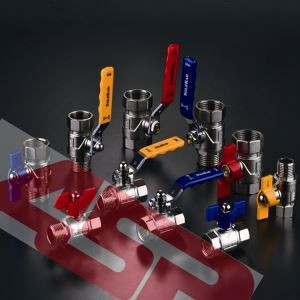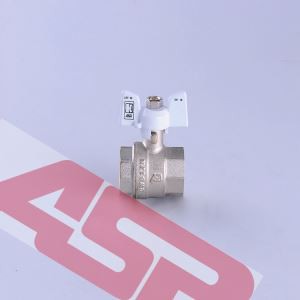

Structure and Principle
Structure: It mainly consists of a brass valve body, ball, valve stem, handle, union components, etc. The valve body is made of brass, which has good corrosion resistance and thermal conductivity. The ball is equipped with a circular through-hole, and the valve stem is connected to the ball. Rotating the valve stem via the handle drives the ball to rotate, realizing the opening and closing of the valve. The union components usually include union nuts and sealing gaskets, facilitating the connection and disassembly of the valve with the pipeline.
Principle: It achieves opening and closing by rotating the ball 90° around the axis of the valve stem. When the through-hole of the ball is aligned with the axis of the pipeline, the valve is open, and the medium can flow smoothly; when the ball rotates 90° and its through-hole is perpendicular to the pipeline axis, the valve is closed, cutting off the flow of the medium.
Features
Convenient Connection: The male threaded connection allows direct connection with pipelines or pipe fittings with internal threads, enabling easy installation and secure connection. The union structure allows the valve to be removed by simply loosening the union nut during installation and maintenance, without disassembling the entire pipeline system, making operation convenient.
Good Sealing Performance: A flexible sealing ring is usually used between the ball and the valve seat, which can effectively prevent fluid leakage, ensure sealing effect, and is suitable for occasions requiring high precision in fluid control.
Easy Operation: Only a 90° rotation of the handle is needed to complete the opening and closing operation, without requiring large external force. It is flexible to operate and suitable for frequent use.
Low Fluid Resistance: After the ball is opened, the inner cavity of the valve provides a straight flow channel for the medium. The resistance coefficient is similar to that of a pipe section of the same length, allowing the fluid to flow smoothly and reducing energy loss.
Application Fields
Civil Construction: Widely used in water supply and drainage systems and heating systems of residential and commercial buildings to control the flow and on-off of water, such as at the inlet and outlet of radiators and the branch of water pipes.
Industrial Field: Also applied in pipeline systems of industries such as petroleum, chemical engineering, electric power, and water treatment. It can be used to control the flow of various fluids such as water, oil, gas, and weak acid-alkali media.
Selection Points
Specification and Size: Select the appropriate ball valve specification according to the nominal diameter of the pipeline to ensure the valve matches the pipeline.
Nominal Pressure: Choose the ball valve with the corresponding nominal pressure (such as PN16, PN25) according to the working pressure of the pipeline system to ensure the sealing performance and safety of the valve under the working pressure.
Applicable Medium: Consider the type of medium the valve is applicable to (e.g., whether it is used for water, steam, oil products, etc.), and select the ball valve with appropriate material and sealing structure.
Hot Tags: brass male threaded union ball valve, China brass male threaded union ball valve manufacturers, suppliers, factory, Brass Ball Valve With Ppr Socket, Brass Gate Valve, Brass Stop Valve, Brass Welding Ball Valve, Lever Ball Valve, Water Ball Valve